
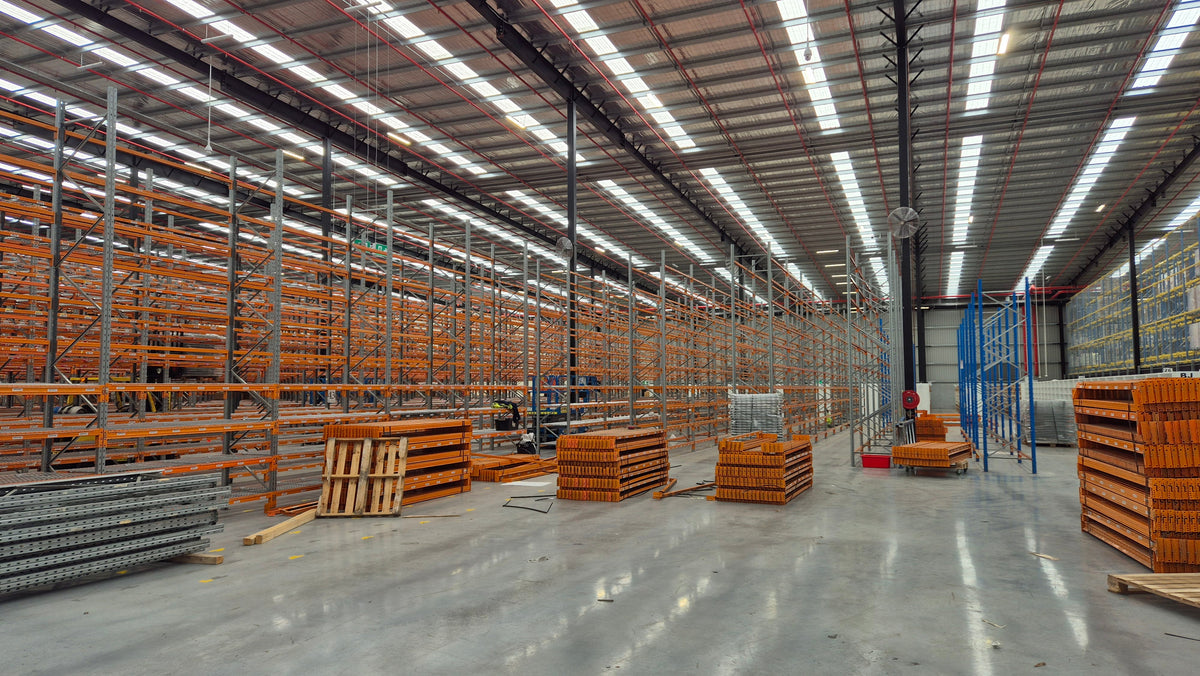
When a lease is coming to an end or a business is outgrowing its space, one question comes up early: what happens to the racking? Often it can come with you. But pallet racking that has been taken down, moved and put back up is only as safe as the care taken at every step, and the decisions that matter most are made well before the first beam comes down.
This guide walks through them in the order they usually come up.
Take it, leave it or start again?
Before planning the move, work out whether your existing racking suits the new building. A few questions help.
- Will it fit? Measure the new site's clear height, floor space, column positions and dock doors, and allow for things like lighting and sprinkler heads. Racking that suited one building won't always suit the next.
- What condition is it in? Look for bent or dented uprights, damaged beams, rust and missing safety clips. Damaged components are best replaced rather than moved and put back up.
- Does it all match? Components from different manufacturers aren't always compatible, so a mixed system is worth checking before it goes back up as one.
- Will the layout change? A new building is a chance to rethink aisle widths, bay sizes and beam levels. If the layout changes, you may need more components, or fewer.
Sometimes the answer is to move everything. Sometimes it's to move most of it and add new bays or replacement parts, and sometimes it's to start again. Whichever it is, it's easier to decide early than halfway through a move.
If some of it isn't coming with you, there are usually options. Racking in good condition can often be sold, and some landlords or incoming tenants are happy to keep racking that's already installed, which can change what your make good clause asks for. If you go that way, agree it in writing with your landlord before you plan around it.
Plan the move around the racking
It's worth planning the racking first rather than fitting it in at the end.
- Draw up the new layout before anything is dismantled, so you know what goes where and what you'll need.
- Check the floor. Racking carries its load through base plates and anchors into the slab. Before the layout is settled, it's worth confirming the new floor is suitable, by asking the landlord for the slab details or having it checked.
- Work out the sequence. Inspect the racking, empty it, dismantle it, move it, put it back up, check it again, then load it. Allow time for each step, especially if you're working towards a lease end date.
- Label and keep components together. Mark frames, beams and decking as they come down, count them, and keep the clips and bolts with them. Check with the manufacturer which parts should be replaced rather than reused, and order any replacements early so they're waiting at the new site.
- Plan for your stock. Decide where your inventory will sit while the racking is down, and how you'll keep trading through the move.
Make good at the old site
Many commercial leases include a make good clause, which can cover removing the racking and repairing the floor where it was anchored. Check what your lease asks for, agree the standard with your landlord early, and take photos of the floor before the racking comes out and after it's made good. Anchor holes, floor markings and any damage left by the racking are the usual things to sort out.
Check it before it takes a load again
Racking that has been moved needs the same care as a new installation, plus a few extra checks because it has been handled along the way.
- Put it back together the way the manufacturer or your supplier specifies. Follow their instructions and the requirements of AS 4084, the Australian Standard for steel storage racking, that apply to your system. The current edition comes in two parts, AS 4084.1:2023 and AS 4084.2:2023. The right components go in the right places, with every beam locked in and every safety clip and safety device fitted.
- Have any change to the setup checked. If the layout, the bay sizes or the beam levels have changed, the load each bay can safely carry may change with them. Have the new setup checked by your supplier, someone acting for them, or another competent person before you rely on it.
- Anchor it, and make sure it's plumb and level. Frames should be anchored to the new floor and stand square.
- Update your load signs. If beam heights or the bay layout have changed, the safe working loads can change too, so the signs need to match the racking as it now stands before you load it, using the ratings from the manufacturer or your supplier.
- Have it inspected before it's loaded. An inspection by a competent person, once it's back up and before it takes stock, gives you a clear starting point at the new site. It's also worth an inspection before you dismantle, so you know what's damaged before it's moved.
If you're in Melbourne, our pallet racking inspection services page explains how to book an inspection through Erect-A-Rack.
Rather hand the job over?
If you're relocating in Victoria, our sister company, Erect-A-Rack, carries out pallet racking relocations, from planning the new layout and working out what suits it through to dismantling, packing, freight and reinstallation. Talk to Erect-A-Rack about your relocation.
If your racking came from us, you'll find more bays and replacement components in our range, shipped Australia wide.
A quick checklist
- Decide early what's moving, what's staying and what's being replaced
- Measure the new site and draw up the layout
- Check the new floor is suitable
- Check the components all match
- Inspect the racking before it comes down
- Label and count every component as it's dismantled
- Order replacement parts early
- Check your lease's make good clause
- Put it back together to the manufacturer's or supplier's specifications and AS 4084, anchored, plumb and level
- Have any change to the setup checked
- Update load signs for the new layout before the racking is loaded
- Have it inspected before it takes a load